Outdoor Woodworking Plans
Plans
New plans in this category are being prepared. Browse all free woodworking plans in the meantime.
Wood that lasts outdoors
- Cedar and redwood resist rot naturally, are light, and weather to a silver grey
- Pressure-treated pine is affordable and rot-resistant; use lumber rated for ground contact for posts that go into the soil
- UK: larch, Douglas fir and pressure-treated softwood are common choices
- Australia: use treated pine rated H3 for above-ground outdoor use and H4 for in-ground posts
Any wood lasts longer when it can dry out. Keep end grain off the ground, leave small gaps between deck or seat boards for water to drain, and slope tops slightly where water could pool.
Screws and hardware
Use exterior-rated coated screws or stainless steel. Ordinary steel screws rust and leave black stains, and modern treated lumber corrodes uncoated fasteners quickly.
Finishing outdoor projects
A penetrating exterior oil or stain is easy to renew every year or two. Film finishes such as spar varnish look glossy but need sanding and recoating when they crack. Paint protects best but hides the grain. Always finish the end grain, which soaks up water the fastest.
Raised garden beds
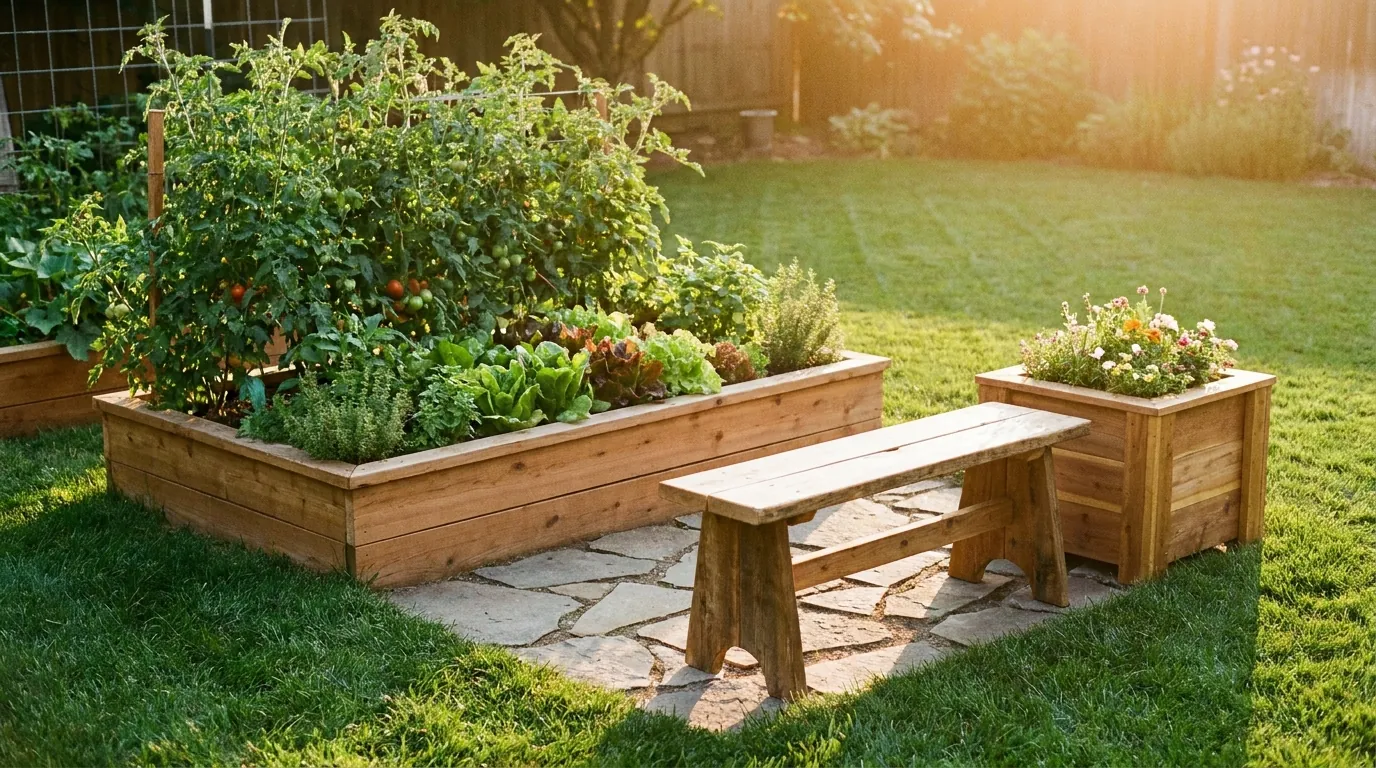
Most vegetables grow well in beds 10–12 in (25–30 cm) deep; root crops do better with more depth. Keep beds no wider than about 4 ft (1.2 m) so you can reach the middle from both sides. Many gardeners use untreated cedar for food beds.
New to building? Start with our beginner woodworking projects. Need a place to build? See our workshop plans.
Frequently asked questions
What is the best wood for outdoor furniture?
Cedar, redwood and teak resist rot naturally. Pressure-treated pine is the most affordable rot-resistant option. In Australia use treated pine rated H3 above ground.
What screws should I use outdoors?
Exterior-rated coated screws or stainless steel screws. Ordinary screws rust and stain the wood, especially in treated lumber.
How deep should a raised garden bed be?
10–12 in (25–30 cm) deep suits most vegetables and herbs. Carrots, parsnips and potatoes do better in deeper beds.
How do I make an outdoor bench last longer?
Use rot-resistant wood, keep legs off wet soil, leave drainage gaps between seat boards, seal the end grain and renew the finish every year or two.