Furniture Plans
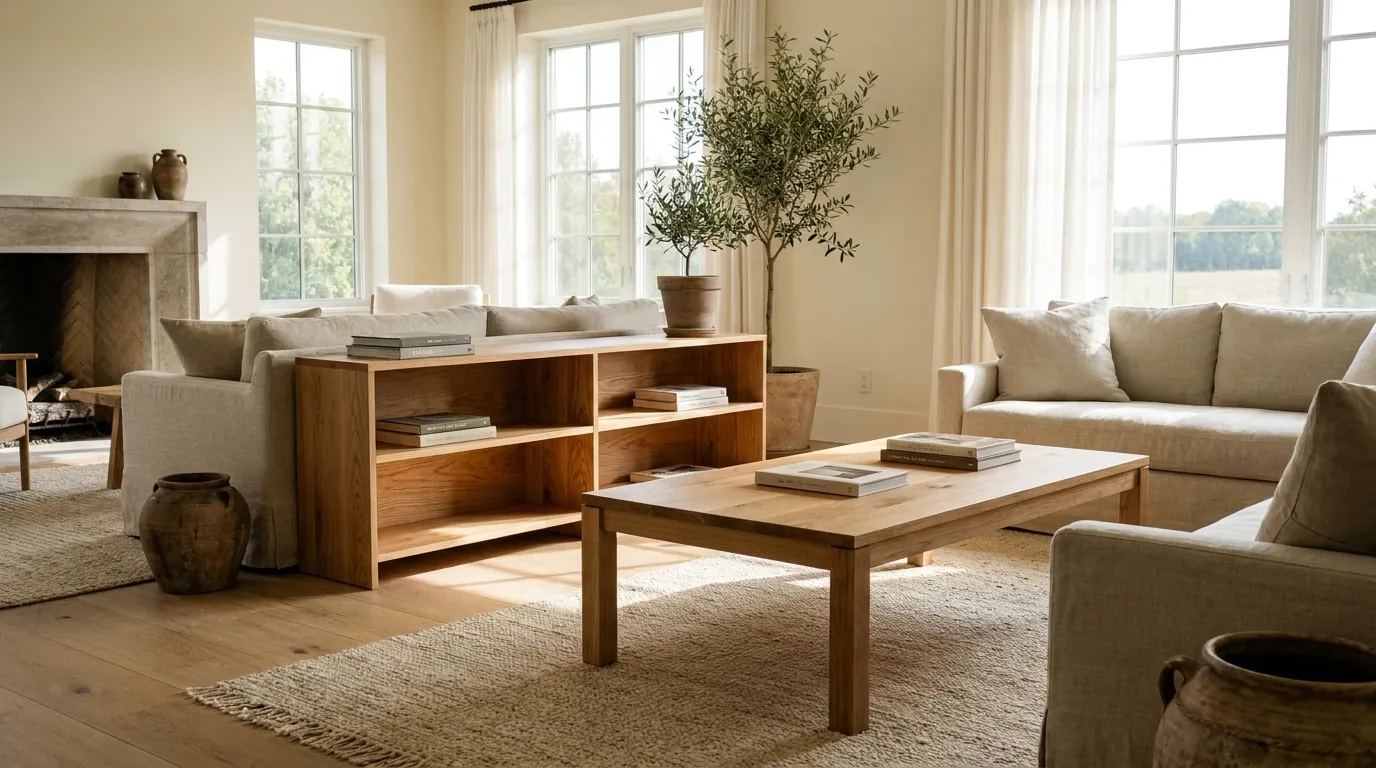
Plans
New plans in this category are being prepared. Browse all free woodworking plans in the meantime.
Standard furniture dimensions
Good furniture starts with the right height. These are common starting points; adjust them to the people who will use the piece.
- Dining table: 28–30 in (71–76 cm) tall
- Desk: 28–30 in (71–76 cm) tall
- Coffee table: 16–18 in (41–46 cm) tall, about the height of the sofa seat
- Bench or chair seat: 17–19 in (43–48 cm) tall
- Nightstand: about level with the top of the mattress
- Bookshelf: shelves 10–12 in (25–30 cm) deep for most books
Choosing wood for furniture
Pine and fir are affordable and take paint well, which suits farmhouse and painted pieces. For a stained or natural finish that resists dents, use hardwoods such as oak, maple, ash or walnut. Hardwood is usually sold by the board foot: use the board foot calculator to estimate how much to buy.
Wood moves with humidity, mostly across its width. Tabletops made of several boards need fasteners that let the top expand and shrink, such as figure-8 fasteners or slotted holes. Each plan notes where this matters.
Making furniture sturdy
Long shelves sag under books. As a rule of thumb, keep spans of 3/4 in (19 mm) pine shelves under about 30 in (76 cm), or add a support. Tables and desks stay rigid when the legs are joined by aprons; tall bookcases and dressers should be anchored to a wall stud to prevent tipping.
New to woodworking? Build one of our beginner woodworking projects first. Looking for storage? See home storage plans.
Frequently asked questions
How tall should a homemade dining table be?
Most dining tables are 28–30 in (71–76 cm) tall. That leaves about 12 in (30 cm) between a standard chair seat and the tabletop.
Is it cheaper to build your own furniture?
Often, especially for solid-wood pieces. Construction lumber furniture can cost much less than store-bought solid wood, though hardwood projects and tools add cost.
What is the best wood for DIY furniture?
Pine is best for painted, budget pieces. Oak, maple and walnut are harder and better for stained furniture that gets heavy use.
Should tall furniture be anchored to the wall?
Yes. Bookcases, dressers and other tall pieces should be anchored to a wall stud with an anti-tip kit, especially in homes with children.