Small Woodworking Projects
Plans
New plans in this category are being prepared. Browse all free woodworking plans in the meantime.
Why small projects are worth building
Small builds use little lumber, so you can try a new joint or a new wood without much at risk. They are also the best way to use offcuts from bigger projects. Many make good gifts and sell well at craft fairs.
Choosing wood for kitchen projects
For cutting boards and serving boards, use tight-grained hardwoods such as maple, cherry and walnut. They are hard enough to resist knife marks and do not hold moisture like open-grained woods. Avoid soft pine and treated lumber for anything that touches food.
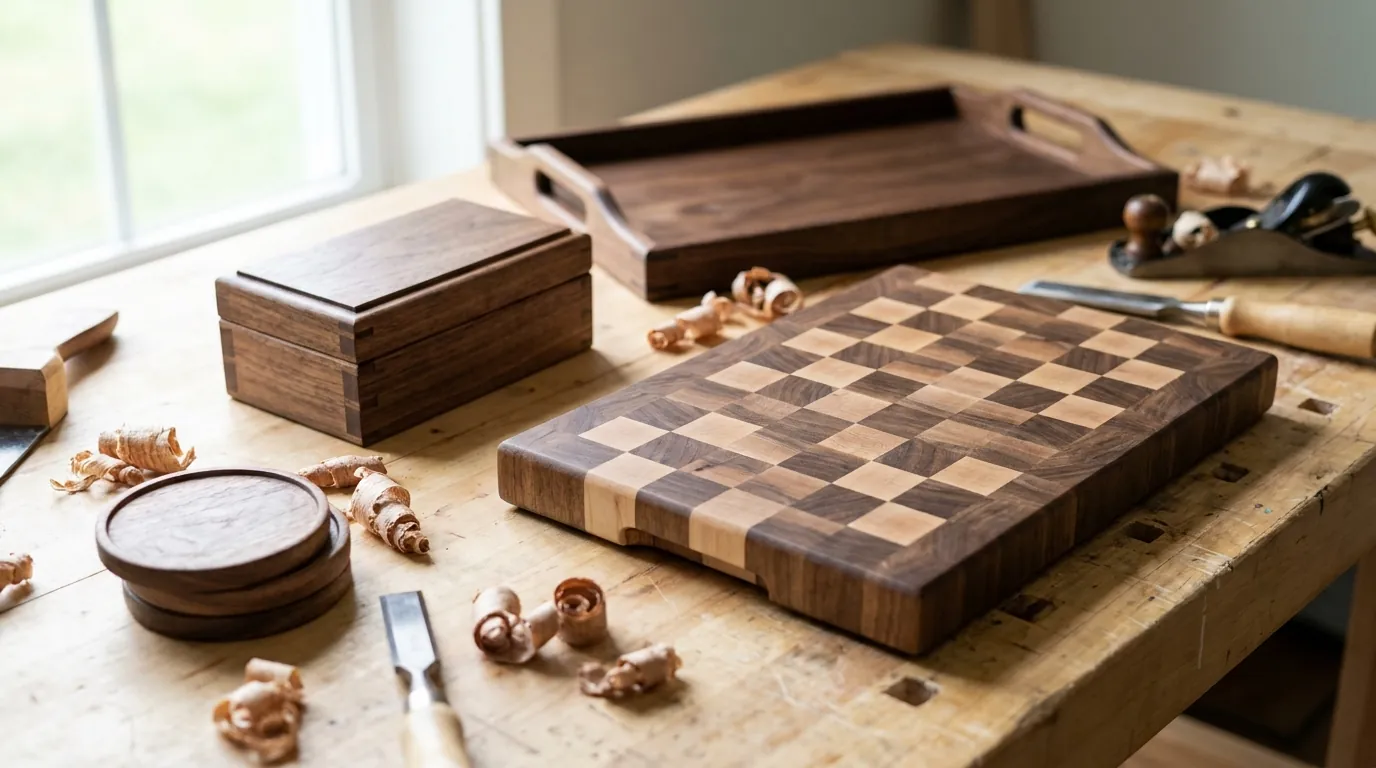
End-grain cutting boards are gentler on knives and hide cut marks; edge-grain boards are simpler to make and a good first project.
Food-safe finishes
Food-grade mineral oil, or a mix of mineral oil and beeswax, is the most common finish for cutting boards. Apply generously, let it soak in, wipe off the excess and repeat every few weeks of use. Many film finishes are food-safe once fully cured, but they can chip on a cutting surface.
Making the most of scrap wood
- Sort offcuts by thickness so you can find matching pieces
- Keep straight, knot-free pieces for small boxes and trays
- Use mixed species for striped boards and coasters
- Throw away pieces with cracks near the ends
Ready for something bigger? Try our beginner woodworking projects or browse all free woodworking plans.
Frequently asked questions
What is the best wood for a cutting board?
Maple, cherry and walnut are the most common choices. They are hard, tight-grained and safe for food contact.
Is mineral oil safe for cutting boards?
Yes, food-grade mineral oil is the standard cutting board finish. A mineral oil and beeswax blend adds a little more water resistance.
What can I make with scrap wood?
Coasters, small boxes, trays, phone stands, picture frames, plant stands and striped cutting boards are all good uses for offcuts.
Can I use pine for a cutting board?
It is not recommended. Pine is soft, scars easily and can hold moisture and bacteria in knife cuts. Choose a closed-grain hardwood instead.